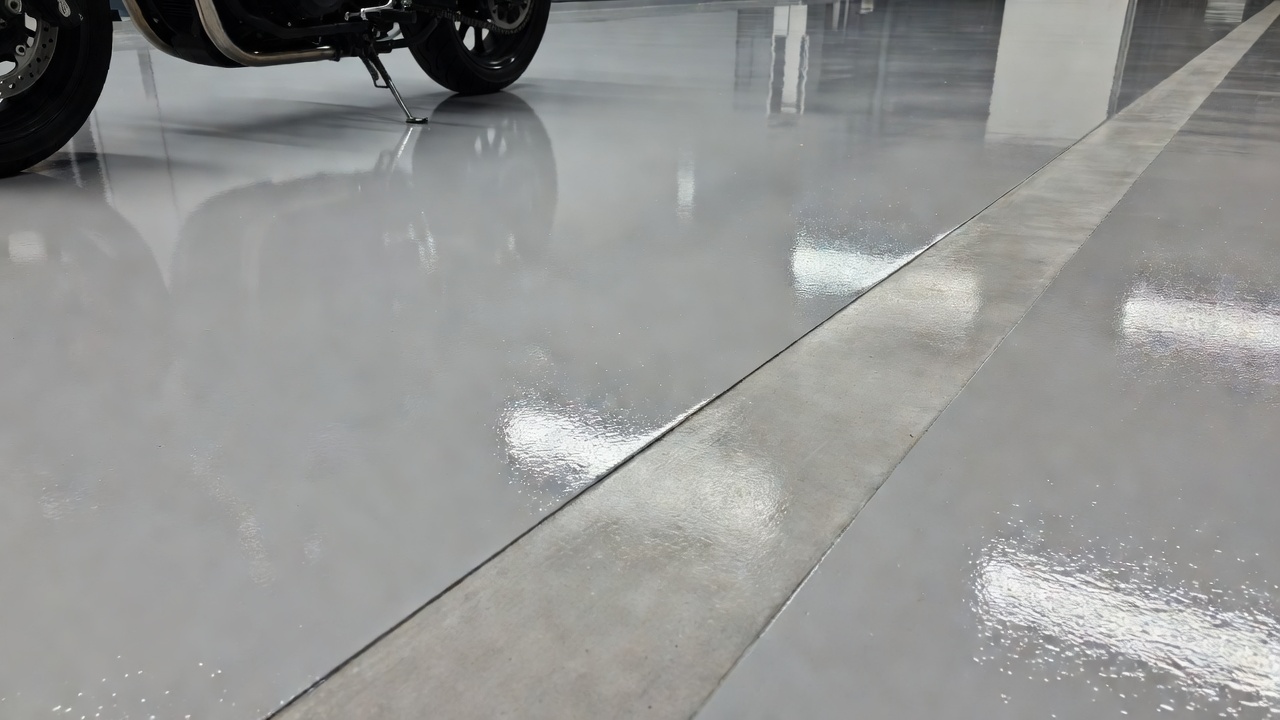
01 Inspect what is already there
Clear the area and examine the floor before covering it. Look for loose material, cracks, depressions, damp patches and old contamination. A new tile or mat may hide a problem without correcting it. If there is unexpected movement, structural damage or persistent moisture, ask a suitable building professional to assess the cause before placing heavy equipment there.
Check the slope, including any fall toward a drain or door. A garage designed to shed water may not provide the level working surface required by a stand or lifting device. Do not level equipment with loose scraps or improvised stacks. The support manufacturer’s installation requirements apply to the complete setup, including any surface layer between the equipment and the building floor.
02 Match protection to its real purpose
| Surface option | Potential benefit | Limitation to investigate |
|---|---|---|
| Drip mat | Containing small routine drips | Compression, movement, fluid compatibility and edge shape |
| Interlocking tiles | Replaceable surface protection | Joint behavior, point loads, trapped moisture and caster travel |
| Applied coating | A continuous, cleanable finish | Substrate preparation, cure, slip behavior and chemical resistance |
| Absorbent pad | Collecting a limited spill during a controlled task | Waste handling, saturation and keeping it away from supports |
A product described as suitable for garages may have been assessed for a different loading pattern from a motorcycle stand. Broad vehicle tires and small metal feet do not apply pressure in the same way. Ask about the specific contact geometry and intended use. Do not convert an advertised vehicle capacity into a stand-contact rating.
Softness can improve kneeling comfort while reducing support firmness. Keep loose kneeling pads outside the support footprint and remove them from the bike’s movement route. A protective sheet beneath the motorcycle should not become a sliding layer beneath your feet or a folded obstruction in front of a stand wheel.
03 Plan edges and movement routes
Walk the route from the doorway to the work area and then check it while carrying a typical tool box. Raised mat borders and tile transitions can become trip points, especially in poor light. Use only compatible transition pieces and follow the surface manufacturer’s installation method. Keep exits and required access routes clear rather than treating them as overflow storage.
Rolling tool cabinets, dollies and stand wheels need particular attention. A wheel can stop suddenly at a joint even when a person can step across it easily. A motorcycle dolly also introduces moving stability and braking considerations; use one only within its documented application and never assume it is appropriate for maintenance simply because it can reposition a parked bike.
04 Make contamination visible
Inspect before each job for oil, coolant, water and cleaning residues. Good lighting helps reveal wet areas and loose objects, but a lighter finish is not a safety control by itself. Identify the fluid and consult its safety information before cleanup. Stop the source when safe, keep people away from the affected area and use compatible absorbents or cleaning products.
Do not wash oil or chemicals into a drain or onto the ground. Used absorbents and contaminated cloths may require special handling, particularly when flammable products are involved. Store waste in containers suitable for the material and follow local collection requirements. General household waste rules are not automatically appropriate for workshop residues.
05 Treat coatings as installation projects
Coatings depend on substrate condition, preparation and curing conditions. Read the full system instructions before buying. Dust control, moisture assessment and ventilation may require equipment or expertise beyond an ordinary home setup. The garage must remain out of service for the specified process and cure periods; a dry-feeling surface does not establish readiness for tires, chemicals or concentrated loads.
Ask how the finished surface behaves when wet or contaminated, and how any slip-resistant additive affects cleaning. Claims about oil resistance do not necessarily cover brake fluid, fuel or every solvent. Product data from manufacturers such as Rust-Oleum and Sika can illustrate why exact systems and preparation details matter. These are documentation references, not product recommendations.
06 Keep electrical and fire risks separate
Water, extension leads and powered tools need deliberate separation. Follow local electrical requirements and use equipment intended for the conditions. Do not route cables beneath mats to hide them, where damage can become difficult to see. Have damaged outlets, uncertain circuits or water ingress inspected by a qualified electrician rather than relying on a new floor covering.
The Occupational Safety and Health Administration’s walking-working surfaces resources explain useful inspection principles, while the U.S. Environmental Protection Agency’s used-oil guidance provides disposal background. These sources do not replace local domestic-building, waste or electrical rules.
07 Reset the surface after work
Once the motorcycle is safely returned to its approved parked condition, remove loose pads, pick up fasteners and clean residues. Inspect mat edges and tile joints for movement or damage. Recheck after a spill, a cabinet relocation or a change of support equipment. Floor protection should make the next inspection easier, not conceal conditions that affect stability.